What a Fire Suppression System Does for Your Kitchen
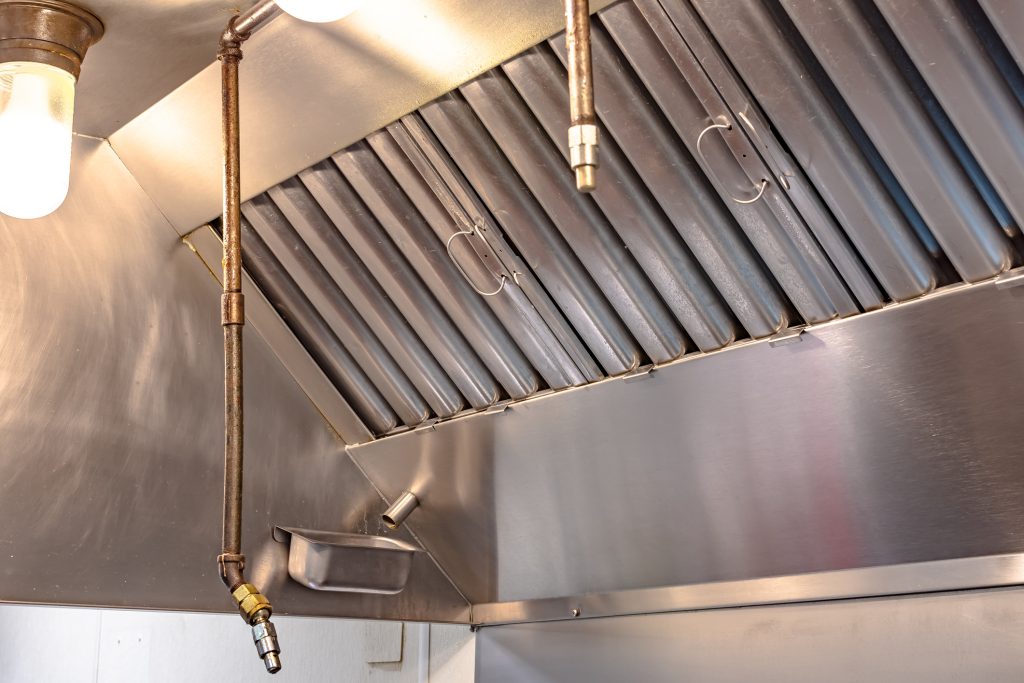
A fire suppression system is your kitchen's last line of defense against a grease fire. Installed directly above your cooking equipment and inside your exhaust hood, these systems detect dangerous temperatures and automatically discharge fire-suppressing agents to contain and extinguish flames before they spread.
DDAN Hood Cleaning and Repair installs UL 300-compliant fire suppression systems that integrate with your entire kitchen exhaust setup. We coordinate with your contractor to ensure full code compliance and seamless system integration.
What's Included in a Fire Suppression System
A complete commercial kitchen fire suppression system includes:
Detection & Activation
- Fusible links that detect heat and trigger the system
- Manual pull stations for emergency activation
- Automatic gas shut-off interlocks
Suppression Components
- UL 300-listed wet chemical agent tanks
- Nozzles positioned over each appliance
- Distribution piping routed through the hood plenum
System Integration
- Interlocks with exhaust fans and gas lines
- Coordination with your fire alarm system
- Compliant with NFPA 96 and local fire codes
Get a Fire Suppression Quote
Call Now: (615) 881-6968
Installation & Coordination
Fire suppression installation requires coordination with licensed contractors. DDAN handles:
- Pre-installation system design and layout
- Nozzle placement based on your equipment configuration
- Agent tank installation and pressurization
- Detection line routing and fusible link placement
- System testing and certification
- Post-installation documentation for inspectors
Repair, Maintenance & Upgrades
Already have a system? We provide ongoing service:
- Semi-annual inspections per NFPA 96 requirements
- Agent recharge after system discharge
- Fusible link replacement
- Nozzle repositioning after equipment changes
- System upgrades from dry chemical to wet chemical (UL 300)
Who Needs a Fire Suppression System?
NFPA 96 requires fire suppression systems in all commercial kitchens with cooking equipment that produces grease-laden vapors:
- Restaurants and fast-food operations
- Hotel and resort kitchens
- School and hospital cafeterias
- Food trucks and mobile kitchens
- Ghost kitchens and commissaries